At a glance
Strategic exercise · Women’s health, D2C · Organic growth strategy
Overview
As employee #5 at Eskalera, an early-stage HR SaaS startup, I was brought in to architect and operationalize the company’s entire brand and go-to-market (GTM) strategy from the ground up. With no existing marketing infrastructure and a fragmented product vision from four co-founders, I led the charge to define market fit, align internal stakeholders, and launch within just four months.
Strategic Leadership & Execution
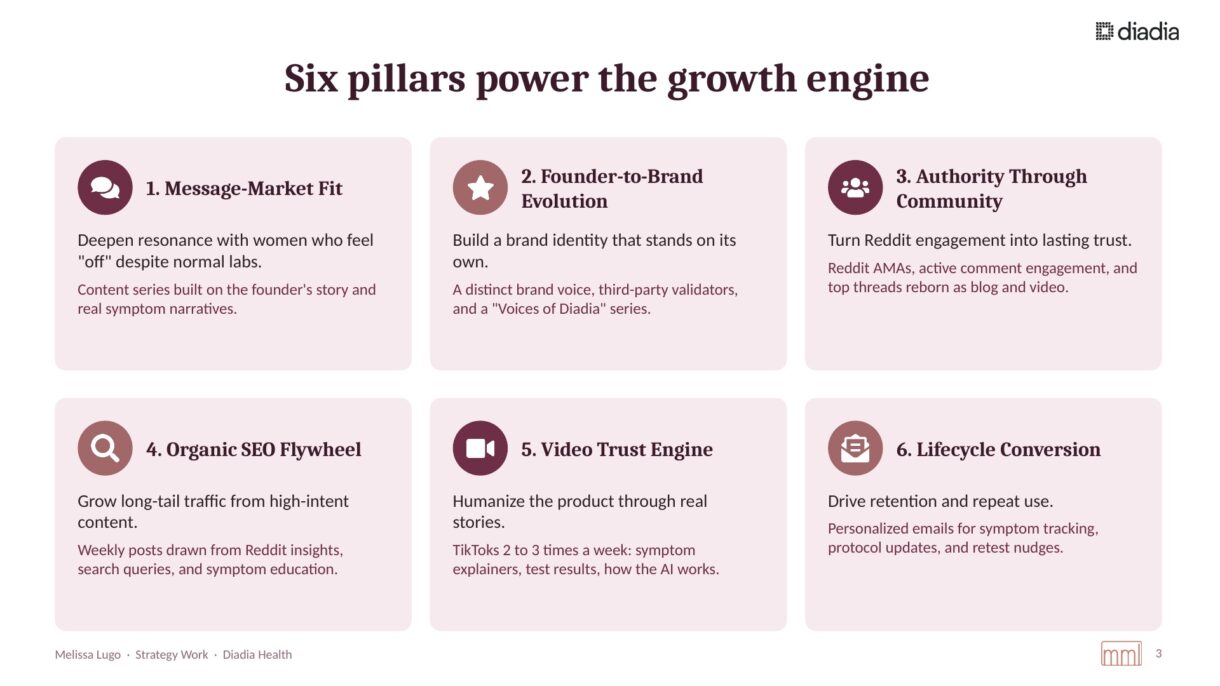
- Six Growth Pillars: Message-market fit, founder-to-brand evolution, authority through community, an organic SEO flywheel, a video trust engine, and lifecycle conversion.
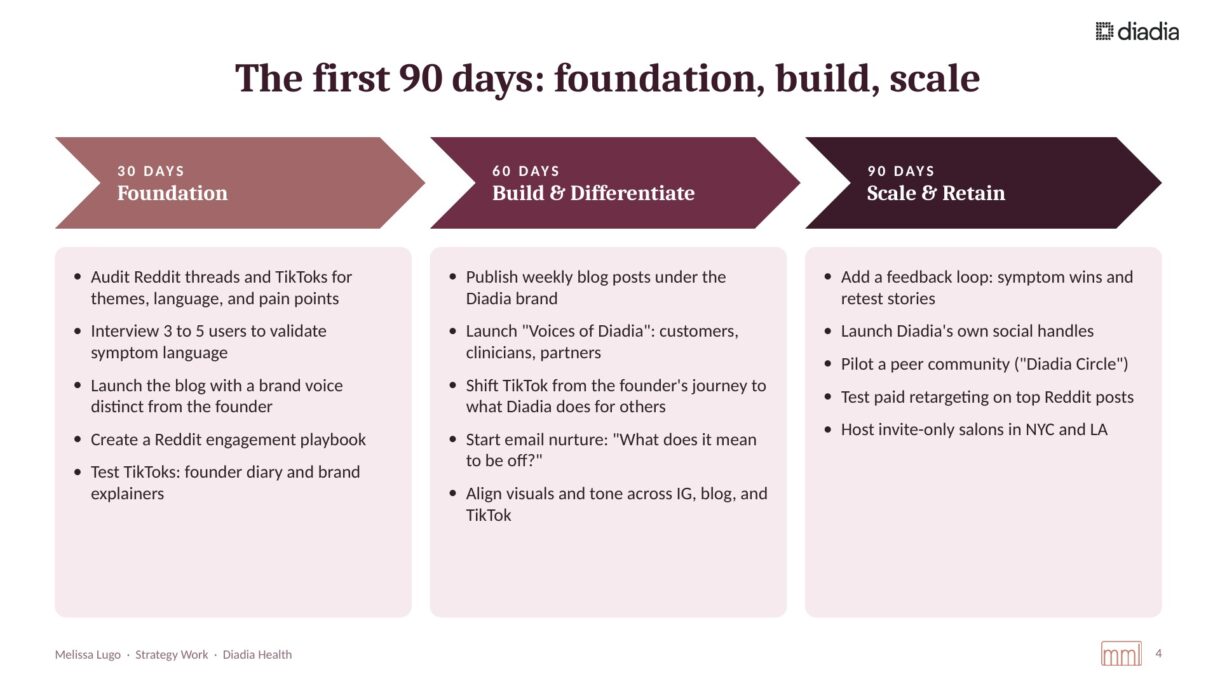
- 30/60/90 Day Roadmap: Foundation (audit community conversations, interview users, define the brand voice). Build (weekly content, a “Voices of” series, email nurture). Scale (owned social channels, a community pilot, paid retargeting on proven posts).
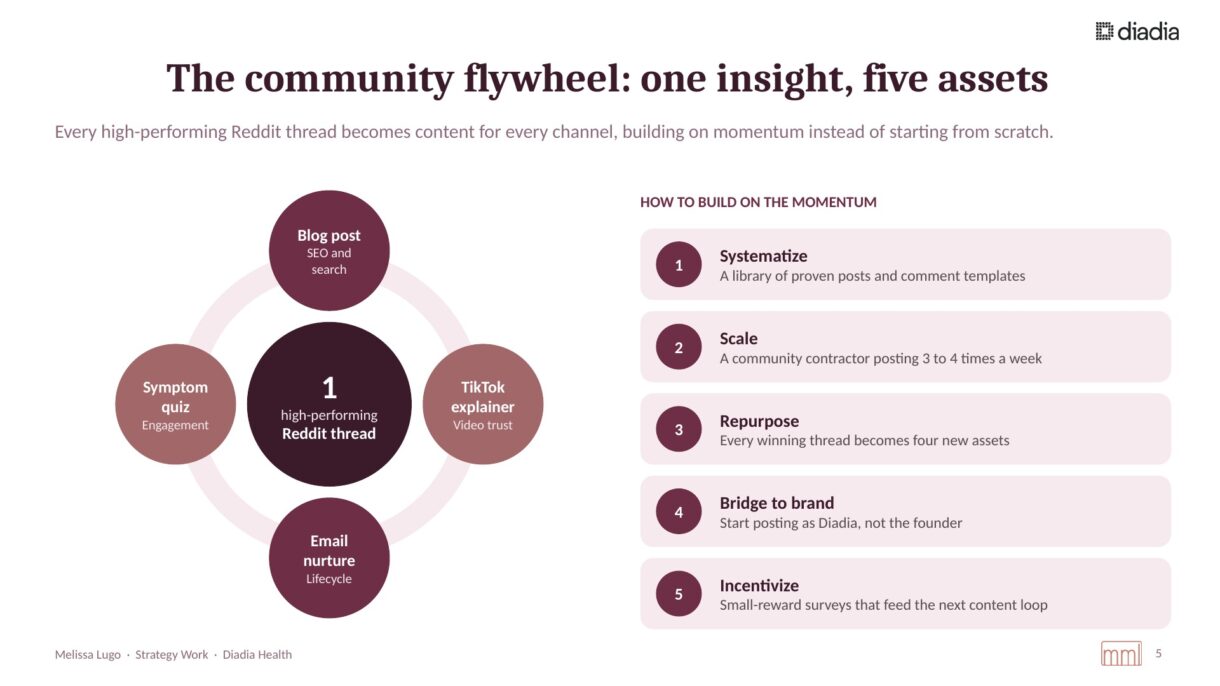
- Community Flywheel: Every high-performing thread becomes a blog post, a short video, an email, and a quiz prompt. One insight becomes five assets.
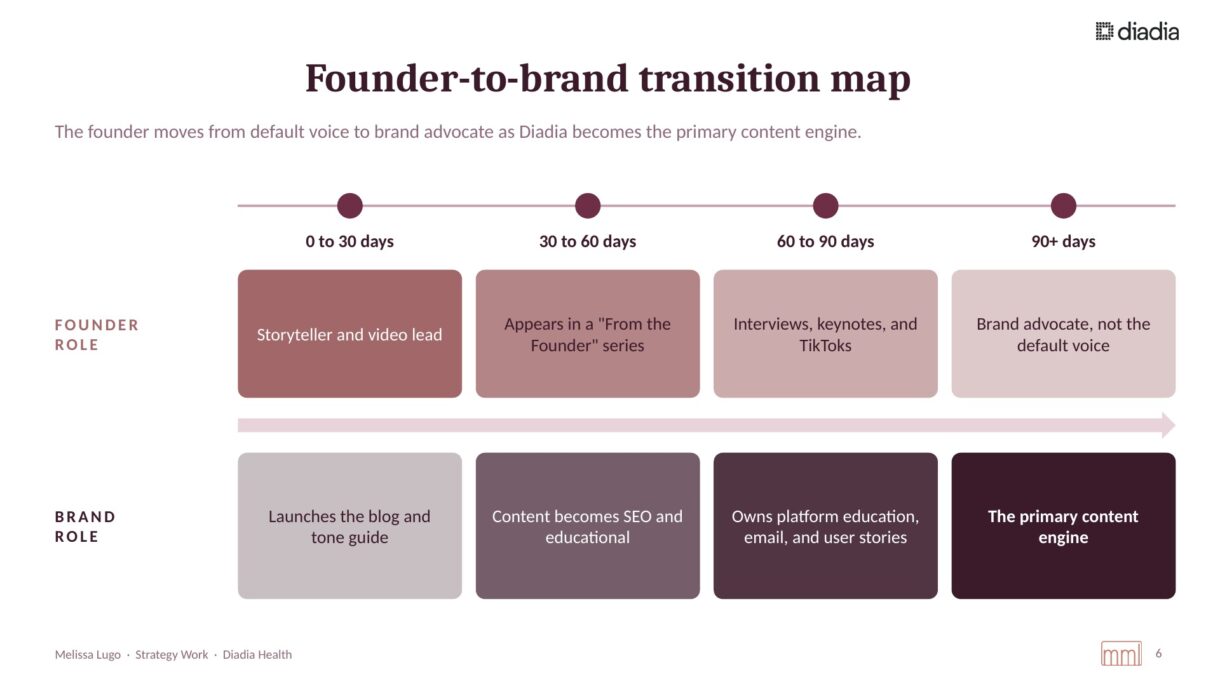
- Founder-to-Brand Transition Map: A phased plan that moves the founder from default voice to brand advocate as the brand becomes the main content engine.
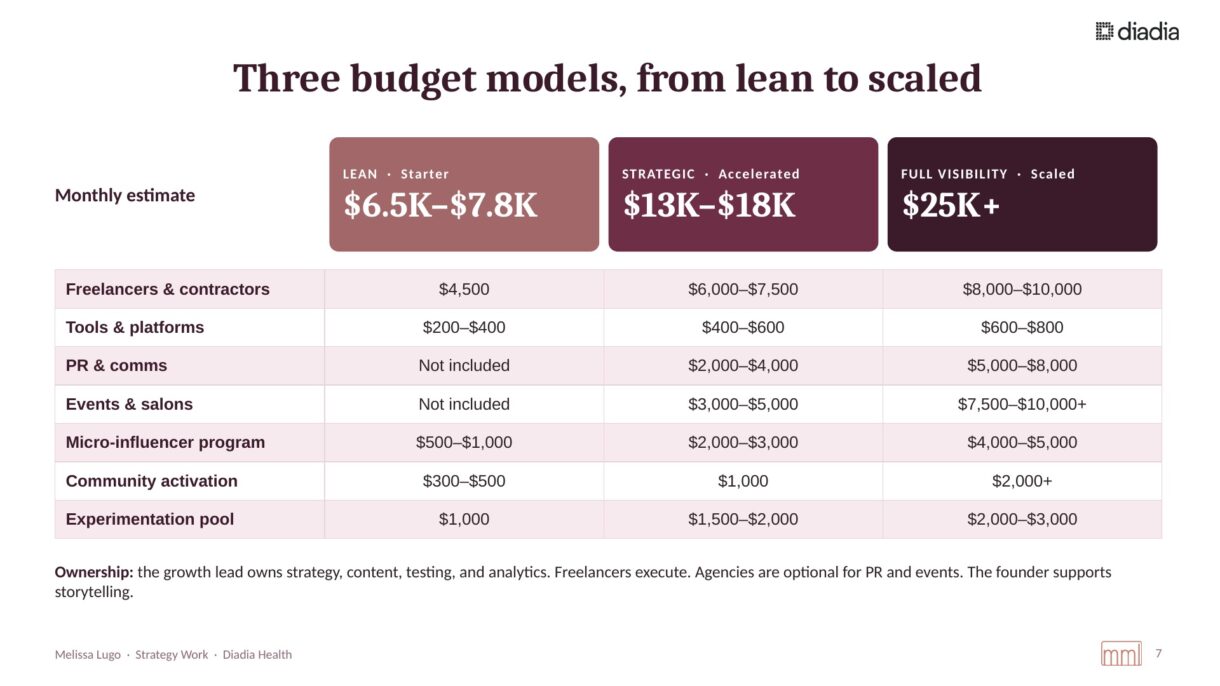
- Budget Models: Three scenarios, from a lean starter (about $6.5K to 7.8Kamonth)toascaledmodel(25K+), with clear ownership across the growth lead, freelancers, and agencies.
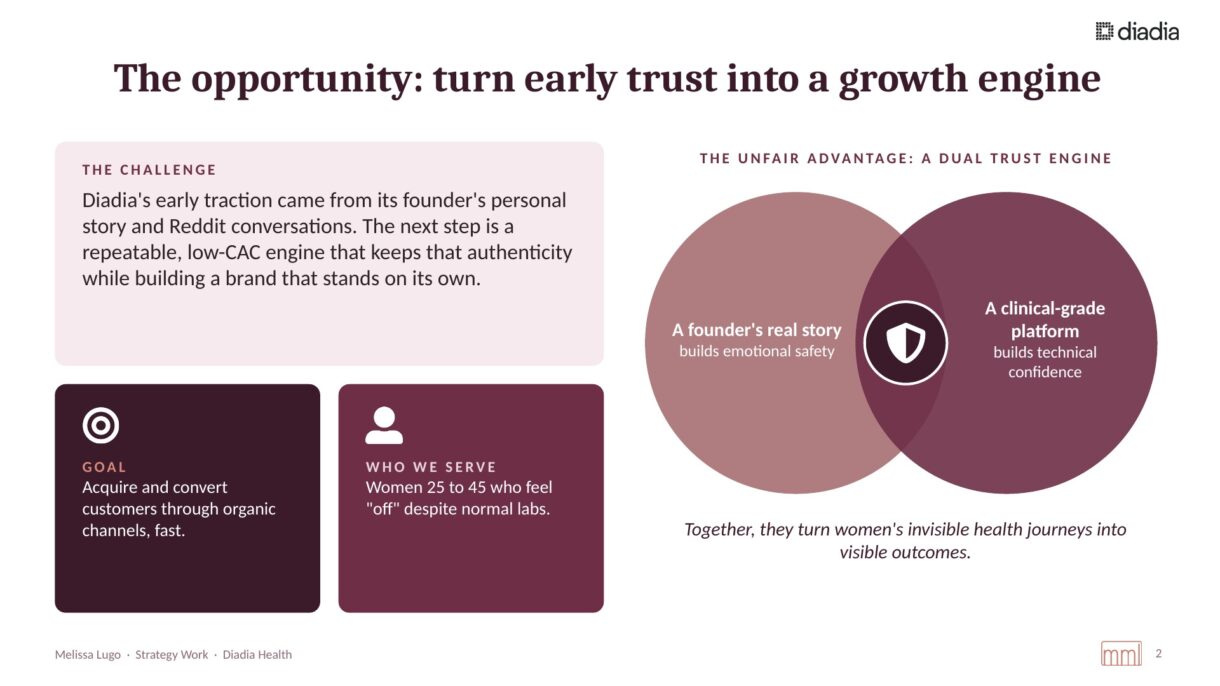
The Unfair Advantage: A dual trust engine. A founder’s real story builds emotional safety, and a clinical-grade platform builds technical confidence. Together they turn invisible health journeys into visible outcomes.
Closing: Growth in women’s health starts with being believed. This plan earns that trust first, then scales it.