

(Retention Strategy) Churn Isn’t Always a Product Problem
Diagnosing why members leave a connected-health subscription, and a plan to keep them.
At a glance
Strategic exercise · Medtech, subscription · Retention strategy
Overview
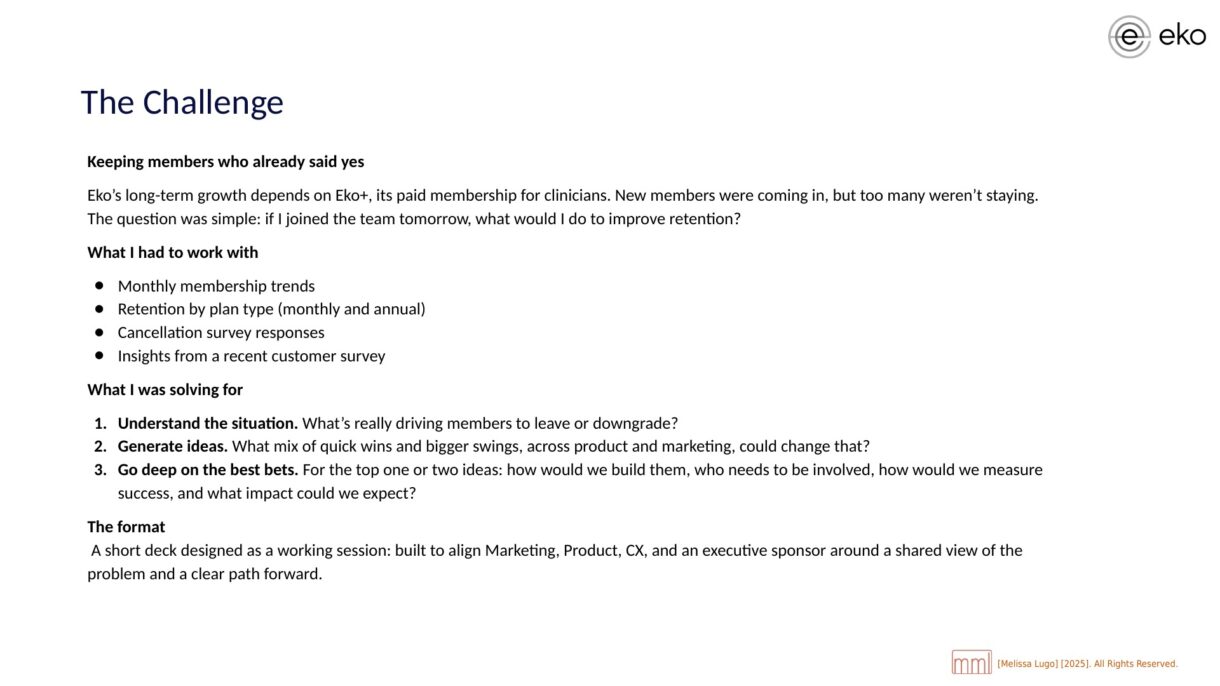
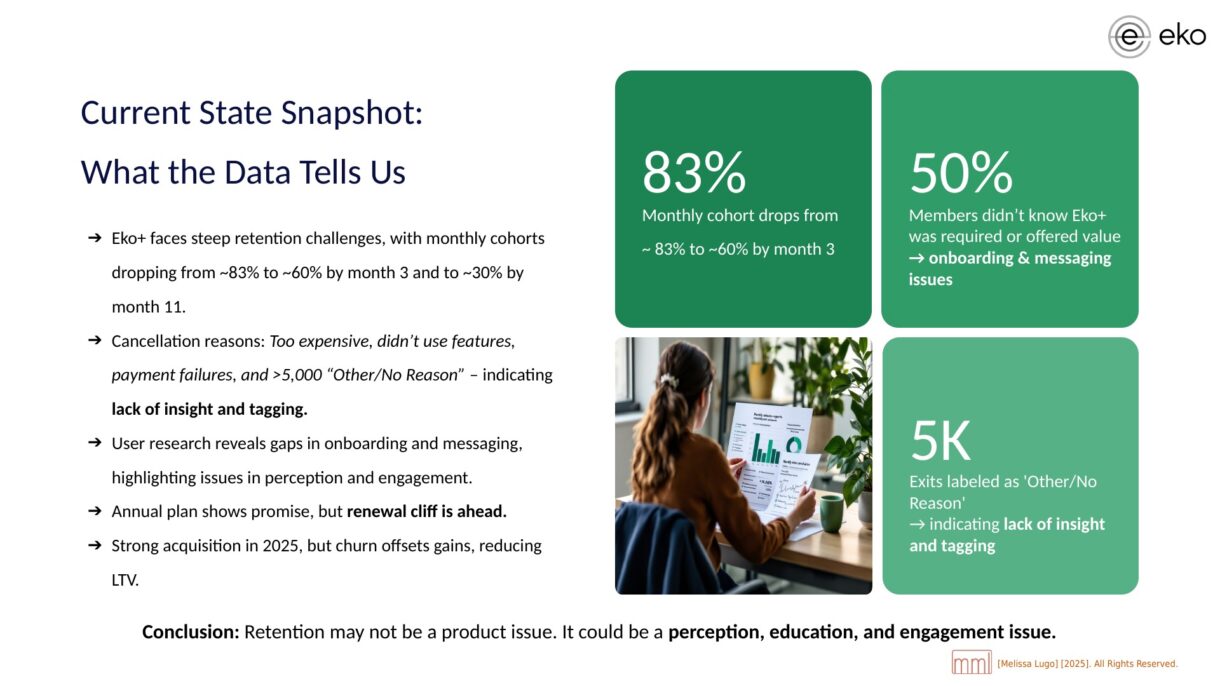
A connected medical device company was losing subscription members fast, with steep drop-off in the first three months. The cancellation data and customer research pointed the same way: many members didn’t fully understand what the membership did or why it mattered. My read was that this was a perception, education, and engagement problem before it was a product problem.
Strategic Leadership & Execution
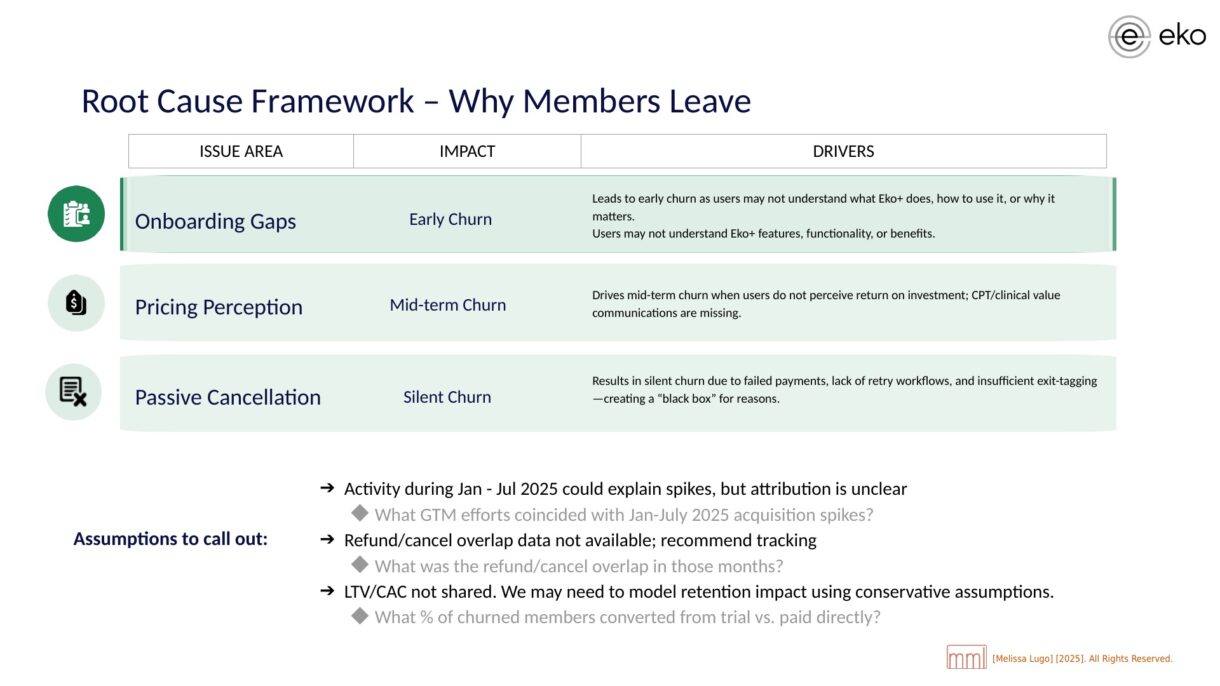
- Root Cause Framework: Grouped churn into three types: early churn from onboarding gaps, mid-term churn from unclear ROI, and silent churn from failed payments and untagged cancellations.
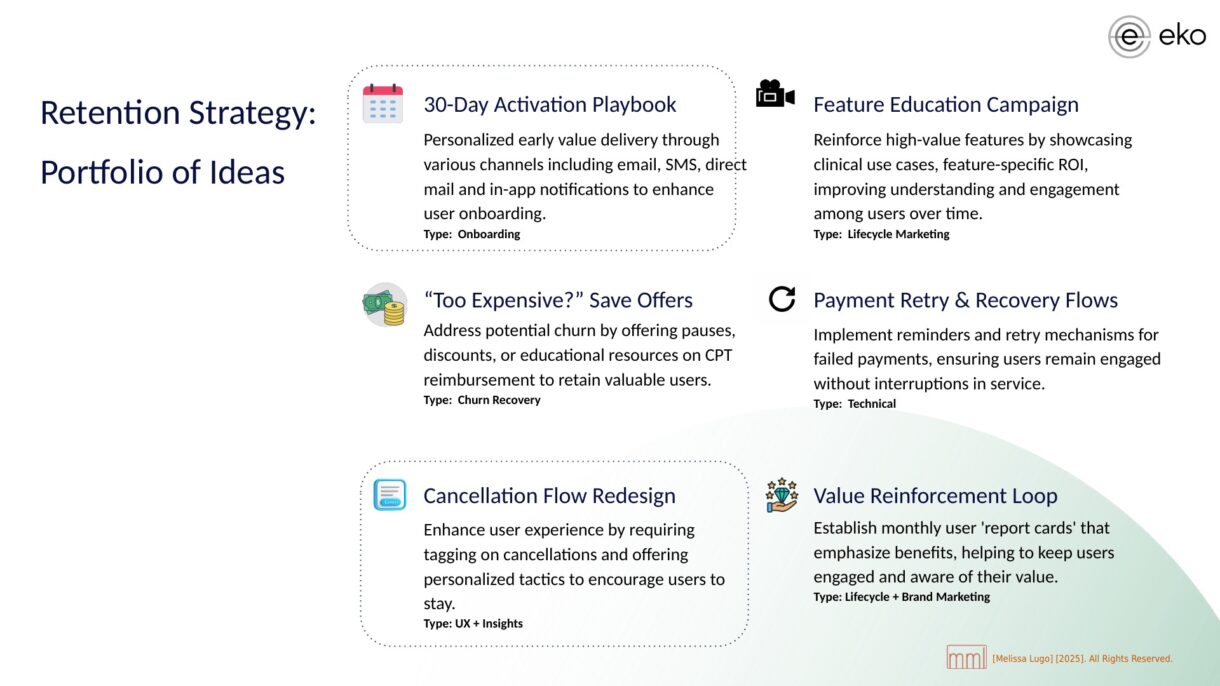
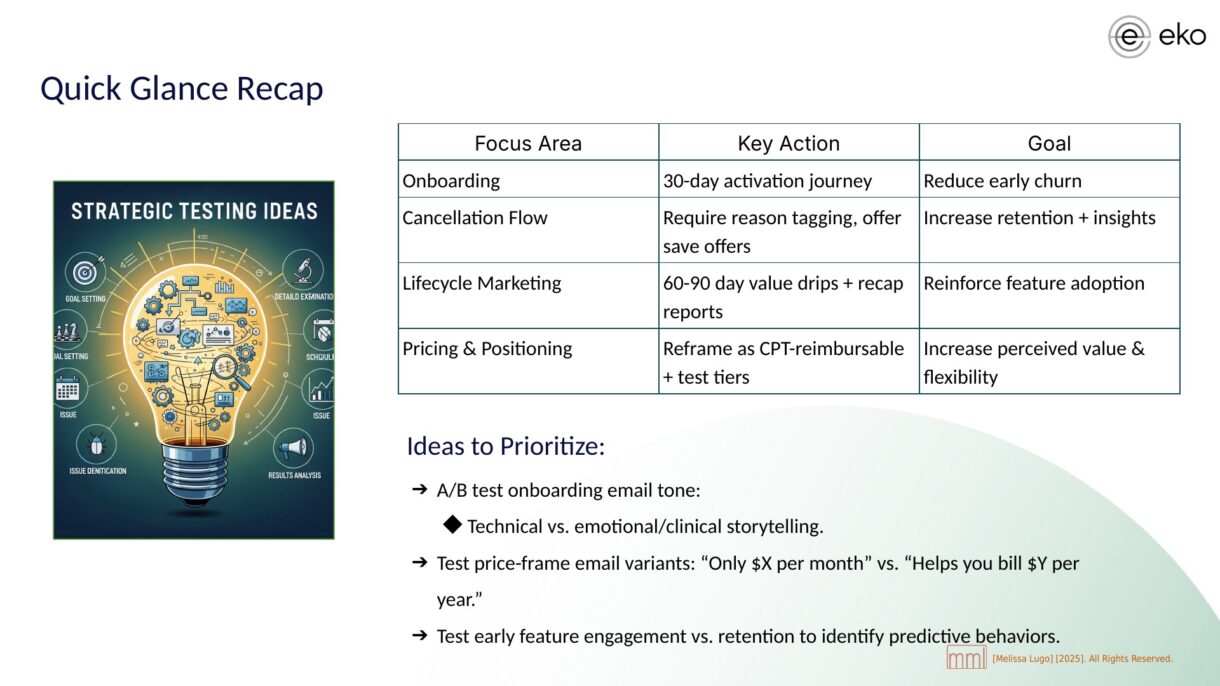
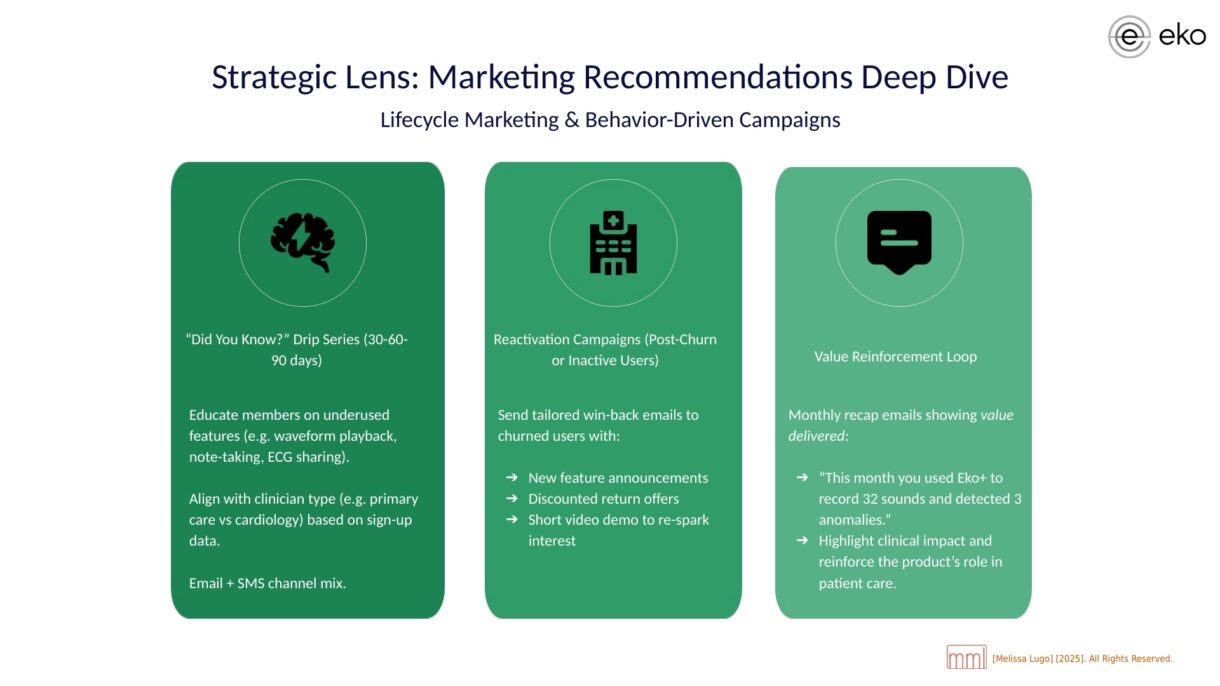
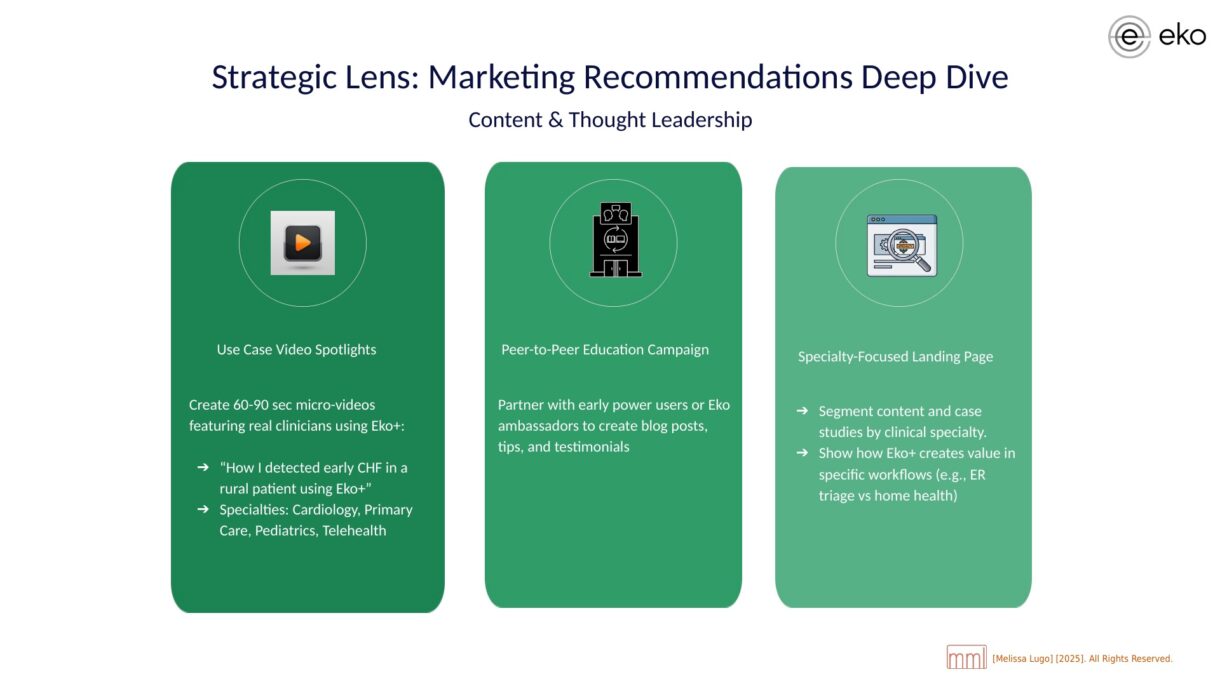
- Portfolio of Ideas: Six initiatives across onboarding, lifecycle, churn recovery, technical fixes, UX, and brand, mixing quick wins with bigger swings.
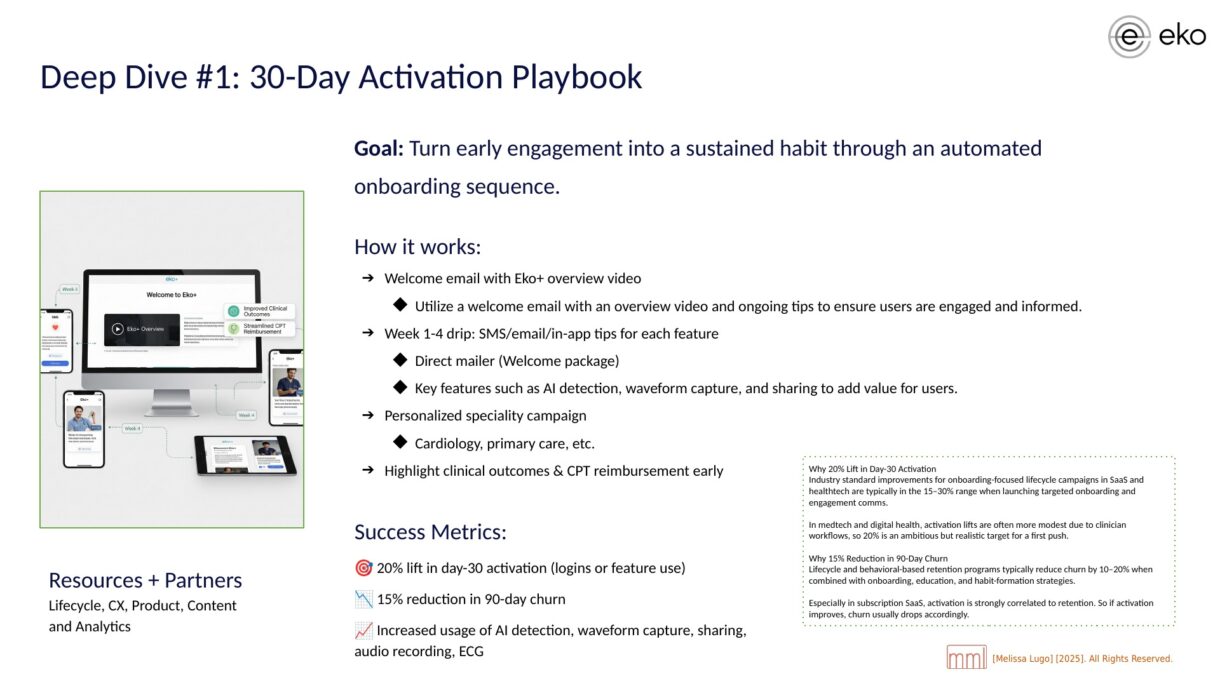
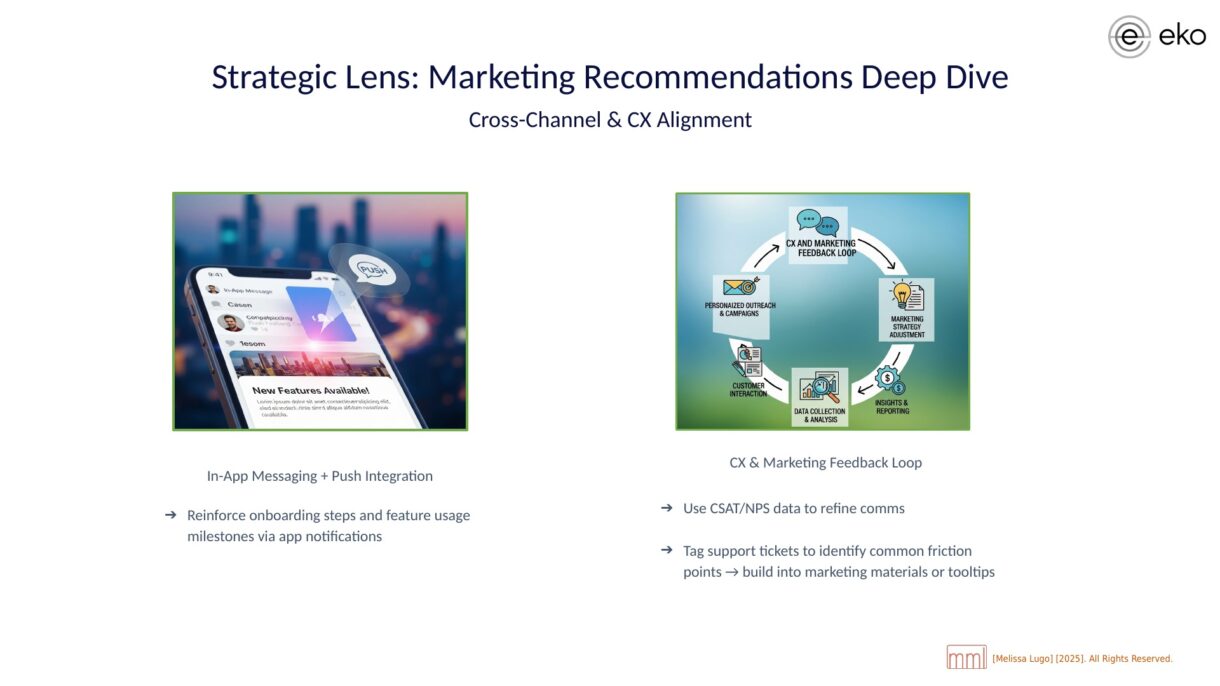
- Deep Dive, 30-Day Activation Playbook: An automated welcome journey across email, SMS, in-app, and direct mail, personalized by clinical specialty and leading with clinical value early.
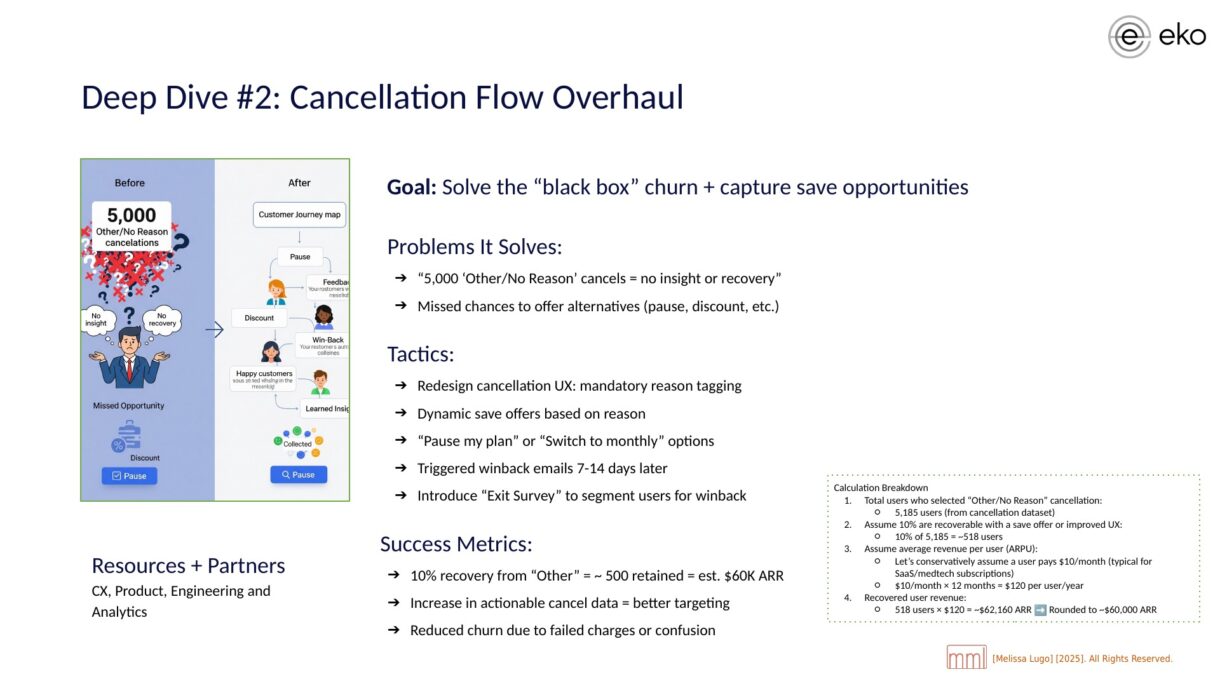
- Deep Dive, Cancellation Flow Overhaul: Required exit reasons, dynamic save offers, pause and plan-switch options, and win-back emails that turn a black box into usable data.
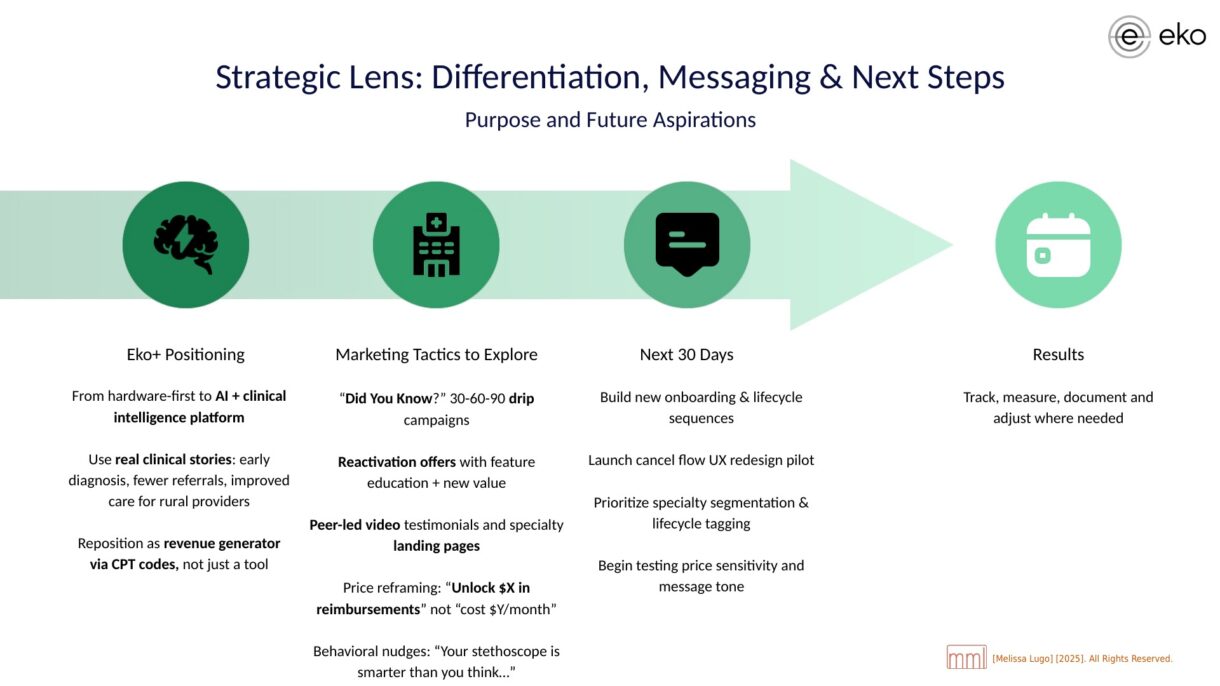
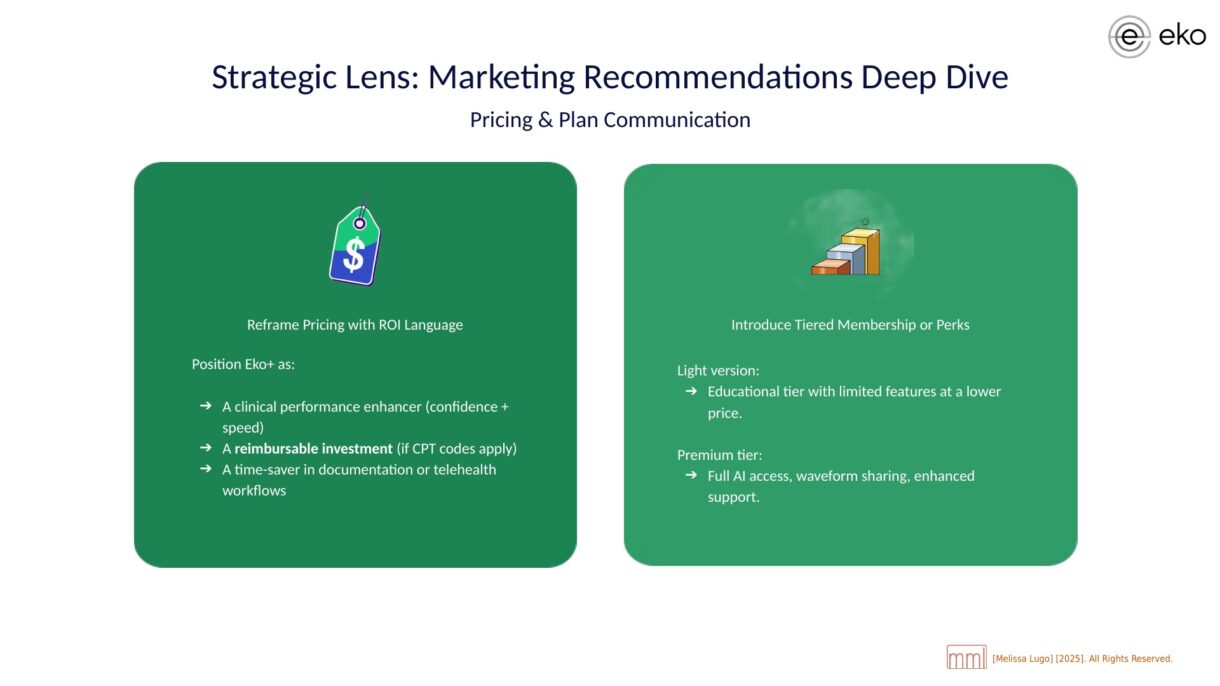
- Price Reframing: Moved the message from what the membership costs to what it helps clinicians bill.
What Success Looks Like: Benchmark-based targets: a 20% lift in day-30 activation, a 15% reduction in 90-day churn, and recovering 10% of untagged cancellations, with the math shown.
Closing: People rarely leave something they understand and value. This plan makes the value impossible to miss.