

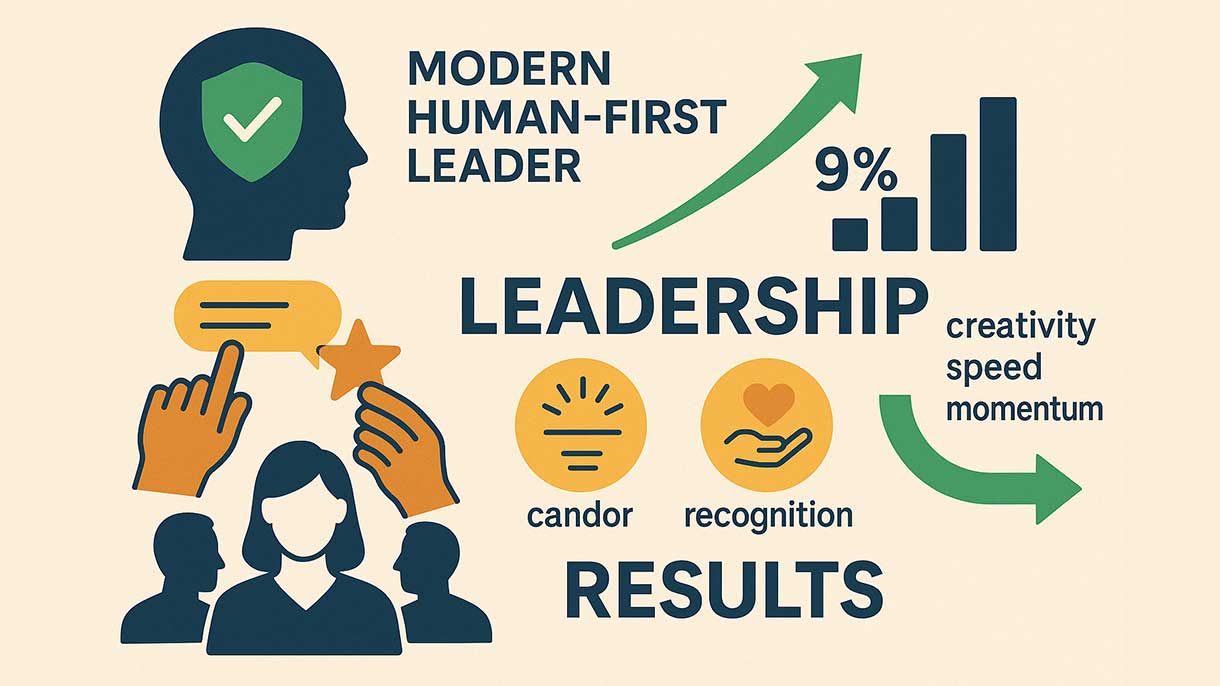

In today’s complex and fast-changing world, leadership isn’t about hierarchy, it’s about humanity.
As leaders, we’re responsible not just for driving results, but for creating environments where people feel safe, seen, and supported. Safety and joy at work aren’t nice-to-haves—they’re business imperatives. They fuel innovation, unlock creativity, and foster the kind of cross-functional collaboration that drives meaningful outcomes.
Here’s how we can lead better, more intentionally, more empathetically, and more effectively, in today’s climate:
1. Emotional Safety Is the New Standard
Workplaces are evolving from command-and-control models to connection-and-care ecosystems. Emotional and psychological safety means people can speak up, disagree, take risks, and be human, without fear. This not only fosters a more inclusive and diverse environment but also accelerates innovation and creativity, leading to more meaningful outcomes.
True safety starts with listening. It’s about asking better questions, acknowledging what you hear, and building trust over time. It’s about making room for diverse voices and lived experiences, especially in high-stakes or high-change environments.
As someone who’s built marketing engines from scratch in regulated industries, I’ve seen firsthand how trust accelerates progress. When teams feel safe, they move faster, ideate more freely, and support each other through challenges.
2. Vulnerability Builds Belonging
Vulnerability isn’t weakness, it’s a leadership superpower. Admitting what you don’t know, asking for input, or sharing lessons from failure creates a culture of transparency and mutual respect. It inspires others to step out of their comfort zones and contribute to the collective growth.
I’ve launched teams and brands under tight timelines with zero playbook. What got us through? Owning what wasn’t perfect, co-creating solutions, and celebrating progress over perfection. When leaders model vulnerability, they invite others to show up fully, too.
3. Celebrate the Work and the People Doing It
Celebrating wins isn’t just about metrics. It’s about momentum, whether it’s a 9% growth in activations or a cross-functional sprint that almost fell apart but didn’t, make it visible. This not only acknowledges the hard work but also motivates the team to continue striving for excellence.
And don’t forget the small things, like the team member who stayed late to QA a campaign or the junior teammate who asked the bold question that sparked a shift in direction. Recognition isn’t just about performance; it’s about presence.
4. Build Cultures of Shared Accountability
In my leadership journey, whether guiding four co-founders to align on a single GTM vision or leading integrated teams across 18+ functions, I’ve seen the power of collective ownership.
Shared accountability doesn’t mean perfection or harmony all the time. It means clarity of roles, mutual respect, and a bias toward action. It means everyone feels responsible for outcomes, not just tasks.
5. Practice Radical Candor (With Heart)
Honest feedback, when done right, is a gift. It helps us grow, it strengthens teams, and it prevents resentment from festering. But candor without care can cause harm.
Radical candor means speaking truth with empathy. It’s holding space for hard conversations while still rooting for each other’s success. When feedback is normalized, not feared, it becomes a tool for growth, not judgment.
Leading Forward
Today’s best leaders are bridge-builders, connecting strategy and heart, vision and execution, people and purpose.
As we continue navigating uncertainty, let’s commit to leading with clarity, courage, and care. Let’s create workplaces where trust isn’t earned through perfection but through presence, where joy is part of the culture, not just the outcome. And where leadership is defined not by how loudly we speak, but by how deeply we listen, and act.
Because when people feel safe, valued, and empowered, they don’t just show up. They soar.
“